ZYSKORO / RESEARCH DESK
How to verify an investment firm
Do not stop at a licence badge. Compare the offer with a record you found independently.
Start with the entity, not the logo
Copy the exact legal name, company number and jurisdiction from the offer. Search the regulator’s own register yourself. A name that looks similar, a screenshot of a licence, or a company-incorporation entry does not establish permission to provide an investment service.
Keep the identity check beside the claim-verification checklist and the fees-and-withdrawal reading. Record the exact legal name, source and date for each observation. A matching name or a single entry does not answer every question about an offer.
In the EU/EEA, ESMA explains how to locate national registers and compare the entity, type and active status. In the UK, use the FCA Firm Checker. In the US, FINRA BrokerCheck provides background on brokers and firms.
Match the permission to the service
Read what the firm is permitted to do. A firm may be registered for one activity but lack permission for the product you were offered. If the record is expired, restricted, or absent, pause and contact the regulator before proceeding. A register search is a starting point, not a promise that the investment itself is suitable.
Test the contact channel
Do not call the number supplied in the unsolicited message. Use a number or website obtained directly from the regulator’s record and ask whether this offer, domain and representative are theirs. This matters because impostors can copy the name of a real firm; the SEC warns about impersonation of licensed professionals.
Record what you found
Use a four-column note: claim, independent source, match or mismatch, next question. For example: “The page says Firm A manages my portfolio; the register shows Firm A but lists a different contact website; I will call the published number before taking any other step.”
Read the register entry, then challenge the offer
A register result answers a narrow question: which entity appears in that register, with which status and permissions? It does not tell you whether the message in your inbox came from that entity. Work through those questions separately and keep the evidence beside the claim. The worksheet below helps organise your observations; it does not approve an investment.
A record you can reproduce
Start a note with the register name, its web address, the search term and the date you searched. Copy the exact legal name and identifying number from the result. Keep the commercial name in a separate field. If several records look plausible, record that ambiguity instead of choosing the most reassuring one. A company registration record and financial-services permission answer different questions.
For a UK example, the FCA's guidance on clone firms recommends checking the product or service and matching the firm's contact details. Use that as a UK-specific procedure, not as an assumption that UK permission covers an offer everywhere. A cross-border offer requires checking the relevant jurisdiction and activity. If a record is unclear, use the regulator's published contact route for clarification.
Annotate a fictional offer
Suppose an invented firm called Example Advisory offers to manage a portfolio. Your note might read: “Entity: Example Advisory Limited; identifier: training example; activity offered: discretionary management; register evidence: permission for another activity only.” The useful next step is to ask the regulator about the mismatch. The example has no real identifier or regulator entry and makes no allegation about any business.
A second row could compare contact channels: “Message directs me to adviser.example.test; the independent record names a different domain.” Names and licence numbers can be copied. Do not resolve that discrepancy by calling the number in the message. Find the contact independently and ask whether the domain and representative belong to the firm. Record what remains unanswered, including the time and method of the response.
Keep an unresolved question visible
Use three states in your notes: observed, conflicting and not established. “Observed” means you have a particular piece of evidence, not that the whole offer is legitimate. An absent warning is not a positive licence. An active status does not prove that a proposed investment is suitable, insured or profitable. Do not translate any of these fields into a safety score.
Before transferring money, put the offer, permission and independently sourced contact side by side. If they do not match, pause the payment and request clarification through an official channel. Save the original message and your dated notes privately. Avoid uploading identity documents, account numbers or correspondence to this worksheet.
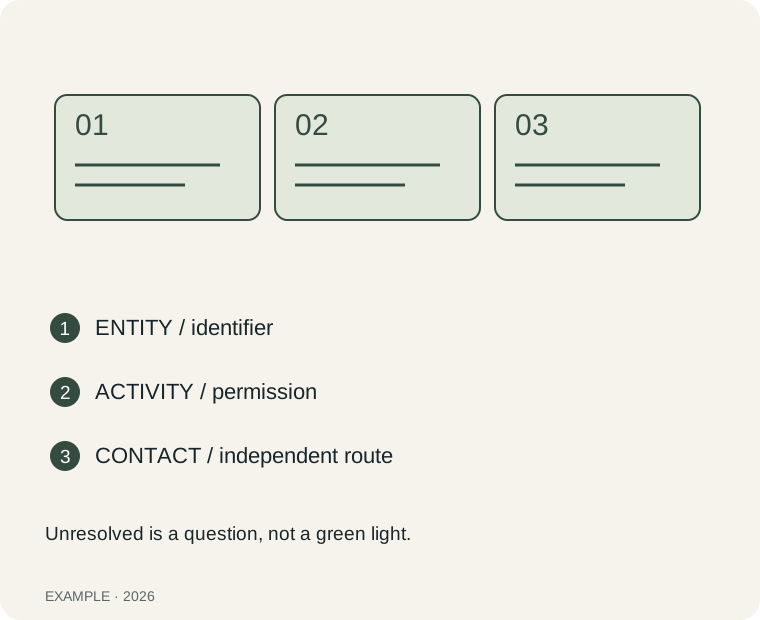
Steps: ENTITY / identifier. ACTIVITY / permission. CONTACT / independent route. Unresolved is a question, not a green light.
Try the local worksheet
Inputs stay in this page and are not sent or stored. Use anonymised examples. No account is needed.
Download the blank worksheet and worked example ↓
Primary context and limits
Put the contract, permission and payment recipient side by side
A familiar legal name in a register does not identify the recipient of your transfer. Use a separate comparison before sending funds. This fictional exercise deliberately has no account number, real company or recommendation to invest.
- Copy the contractual counterparty’s exact legal name and jurisdiction from the actual agreement. Keep a trading name separate. Identify what service the agreement says will be provided, rather than relying on a logo.
- Independently locate the relevant regulator and check the entity, activity, status and contact route. A corporate registration and a financial permission answer different questions. Ask the regulator if the activity or cross-border scope is unclear.
- Compare the named beneficiary in the payment instruction with the contractual entity. If an intermediary is named, request its role and the applicable written arrangement through an independently verified contact. Do not assume that either a match or a mismatch alone settles legitimacy.
- Keep the result unresolved until the discrepancy is explained through that trusted route. Do not make a small test transfer as proof. Save originals privately and share sensitive details only with your genuine provider or competent authority.
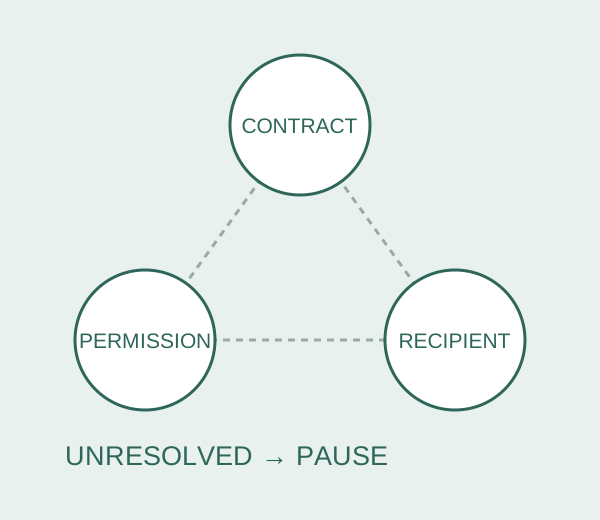
| Field | Example or check |
|---|---|
| Agreement — fictional | Example Research A: named as the provider. No real registration, permission or address is claimed. |
| Independent record | Training placeholder only: the exercise has no verified financial-services record. In a real case, save the register URL, query, activity and date. |
| Payment instruction | Names Example Collection B. Question: what documented relationship connects B to A and to this specific agreement? |
| Safe next step | Pause the payment. Use independently obtained contact details to ask whether the instruction and named intermediary belong to the genuine provider. |
| Comparison card | Contract entity __; activity/jurisdiction __; independent record __; payment recipient __; documented intermediary role __; trusted confirmation __; unresolved point __. |
A completed card is evidence organisation, not a safety score, licence, insurance statement or promise of recovery. This page does not collect your agreement or payment details.
Sources: FCA — clone firms
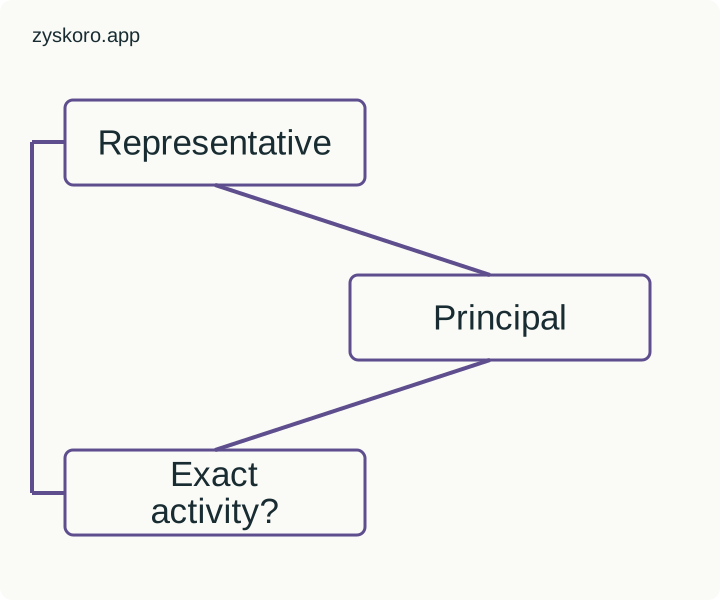
An appointed representative needs an activity check too
For a UK offer, a register entry naming an appointed representative is the start of a scope check. The FCA’s consumer guidance, updated 22 September 2026, distinguishes the representative from its principal. This is a verification exercise, not an endorsement or a determination of compensation rights.
- Find the exact entity in the FCA Firm Checker or Financial Services Register yourself. Record its reference number, status, listed principals and the date checked; distinguish a similar trading name from the contracting entity.
- Write the proposed service in plain words. Using contact details obtained independently from the register, ask the relevant principal whether this representative may conduct that exact activity on its behalf. A representative may have more than one principal; do not choose one merely because its name is familiar.
- Keep the reply with the offer and proposed recipient details. A reply covering introductions does not establish permission for a different investment service. If the answer is absent or mismatched, leave the activity unconfirmed and do not treat a logo as a substitute.
Worked record
| Fictional offer | Example Introductions Ltd says it is an appointed representative and asks a customer to enter an investment-management contract. |
|---|---|
| Evidence obtained | Its principal confirms only the introduction activity in the question put to it. This invented reply is not a real firm search. |
| Conclusion | The proposed management activity is not established by that answer. This does not itself establish fraud; the mismatch remains unresolved. |
| Reusable request | Representative legal name/reference __; proposed service __; relevant principal __; independent contact route __; exact permission question __; reply/date __. |
The FCA warns that activity beyond a principal’s agreed scope can affect protection. Do not promise Ombudsman or FSCS coverage from an entry alone. The worked mismatch and request wording above are our own fictional example.
Primary sources: FCA: how to check a firm or individual is authorised
Finish a firm check with a decision you can trace
Record the advertised service first. In the UK, the FCA Firm Checker helps check whether a firm is authorised for the service you are considering. Verify the contact details independently.
- Write down the legal name and the service described in the offer. Use the official checker to confirm the relevant permission and contact details.
- Compare those details with the contract and payment request. Mark each field as matched, different or unverified.
- If a contact or payee differs, pause and use an independently obtained official contact to ask for clarification.
Fictional record: North Example Ltd offers investment advice. Name matches a register entry. Permission remains unverified and the offer uses a different phone number. Decision: pause. Next step: verify the permission and contact the firm using the official entry.
Keep the old check when a register entry changes
A saved register result is evidence of what you observed at a particular time. It is not a permanent approval of a firm, a service or an incoming message. When an entry changes, preserve the earlier observation and make a new one rather than silently replacing the first.
Keep two observations and one open question
- Identify the same entity: retain the exact legal name, jurisdiction and official identifier. A similar trading name is not enough to connect two entries. If identity remains uncertain, keep the observations separate.
- Preserve the earlier record: retain the official source URL, search terms, date/time and the fields actually checked. Keep any original capture privately. An excerpt without its source and date cannot establish which version you saw.
- Make a fresh independent check: open the regulator’s own register through a trusted route. Record the current status, relevant activity and contact details. Identify the precise changed field; do not infer a reason for the change from its appearance alone.
- Revisit the decision: ask whether the new evidence answers the original service question. Use the regulator’s published contact route when the meaning or scope is unclear.
A synthetic version record
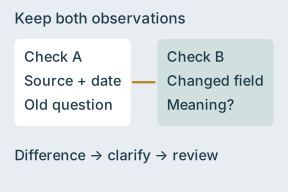
Check A, 1 November, 10:00 UTC: an invented training card records “Example Advisory; identifier held in the exercise; service permission not checked; contact source saved”. The note’s decision is “no conclusion on the proposed service”. It must not later be rewritten as an approval.
Check B, 11 November, 10:00 UTC: a second training card for the same fictional identifier records “an additional restriction note is visible; exact wording retained; meaning for the proposed service unresolved”. The action is to pause the next decision and seek clarification independently. These are invented observations, not real FCA entries or allegations about a business.
Difference note: “A restriction field is present in B but was not recorded in A. We have not established when it became effective, why it appears, or whether A’s capture was complete.” This wording distinguishes a change in your evidence from a proven change at an exact historical moment.
Copy this record: entity/identifier ___; offered service ___; observation A source/date/fields ___; observation B source/date/fields ___; exact difference ___; capture limitations ___; independent clarification route ___; decision reopened and owner ___. Never place account details, identity documents or private correspondence in a public worksheet.
The FCA describes its Financial Services Register as including currently and previously authorised firms and individuals. That historical scope is why an entry and a dated observation need interpretation. This UK example does not establish permission in another jurisdiction, compensation rights, investment suitability or safety.
Read a representative’s employment and disclosure record without turning it into a verdict
A firm check and a check of the individual contacting you answer different questions. For a US securities professional, FINRA’s BrokerCheck can provide background information, employment history and reportable disclosures. Read the particular record’s scope and explanations. An entry is not an endorsement, and a disclosure count is not a reliable automatic safety score.
Keep four fields apart
- Identity: find the person independently through the official service. Retain the exact name and identifier, search date and record URL. Similar names alone cannot establish a match.
- Employment: read dates, firm names and the distinction between reported employment and current registrations. A past employer’s name in a message does not establish a current relationship or permission for the offered service.
- Disclosure: open the event details. Record its category, status, dates, reporting source and any explanatory responses. A pending allegation has not become a proven finding merely because it appears in a report.
- Offer: compare the actual service and contact details separately, using independently obtained official channels. Do not treat either a clean-looking history or an unresolved event as a complete decision about the investment.
A filled fictional reading record
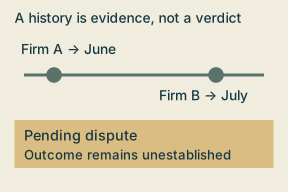
Training person R: the exercise says the person worked at Firm A until June and joined Firm B in July. An October message still uses Firm A’s branding. The dates create a question: who is actually offering this service now? They do not prove impersonation. No real person, identifier or firm is represented.
Training disclosure D: “customer dispute; pending; allegation described; no final disposition recorded in this invented card.” Write “pending allegation; outcome not established”. Do not rewrite it as “guilty” or “cleared”, and do not assume a settlement or withdrawal if none is shown.
Next action in the exercise: pause the offer decision and contact the relevant genuine firm through an independently established route. Ask whether the person, domain and proposed activity belong to it. Preserve the dated report and response privately. The worksheet does not collect identification documents or send anything to a third party.
Copy: jurisdiction/register ___; person identifier ___; observation date ___; employment period and source ___; current registration evidence ___; disclosure category/status/reporting source ___; unresolved wording ___; proposed activity/contact mismatch ___; independent clarification route ___; limited decision ___. Check the report’s own limitations and seek clarification from the competent regulator when scope is uncertain. This procedure neither recommends an investment nor promises protection or recovery.