ZYSKORO / RESEARCH DESK
Investment claims that need more proof
A warning sign is a reason to investigate, not a verdict on an individual business.
High returns with little risk
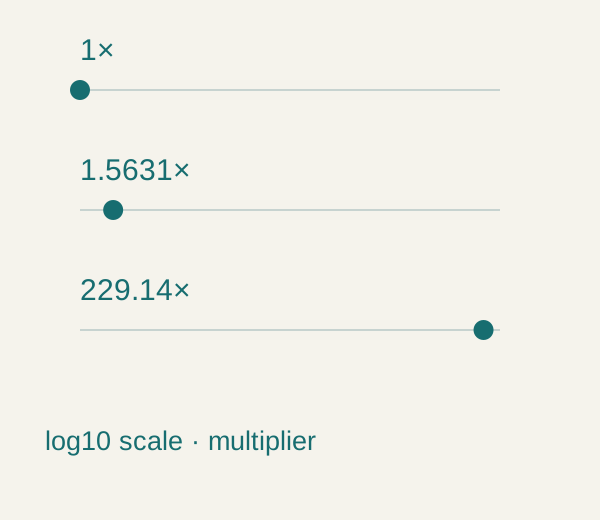
Ask what asset generates the return, what can cause a loss, and what evidence supports any guarantee. A fixed daily percentage can compound into an extraordinary annual claim: 1.5% each day would multiply a balance by roughly 230 over a year if it were reinvested daily. That arithmetic is a reason to demand evidence, not a forecast. The SEC lists guaranteed returns and “risk-free” offers as warning signs.
Turn each concern into a question for the firm-verification worksheet: which entity, which claim and which source could answer it? Use the terms-reading guide for a withdrawal or fee condition rather than inferring it from a marketing statement.
Testimonials and technology claims
A review, an AI label or a photo of a dashboard does not independently verify trading activity, account custody or withdrawals. Ask for the legal entity, audited records where relevant, written risk disclosures and a way to verify them independently. Avoid treating uncheckable performance screenshots as evidence.
Urgency and unusual payment methods
A countdown or “last place today” message gives you less time to check. Payment to a private account, by gift card or through crypto can be difficult to reverse. The SEC's investor guide describes these patterns. Pause, preserve the offer and use the verification steps before sending anything.
A reusable pause rule
If identity, permission, terms or payment destination cannot be independently matched, do not pay yet. Save the specific unresolved question. A trustworthy answer should be precise enough to check without relying on the seller’s own marketing page.
Turn a daily-return claim into questions, not a deposit
Compounding arithmetic can expose the scale of a promise. It cannot verify that a platform earns or pays it. The calculation below assumes a constant 1.5% daily return, immediate reinvestment, no fees, no losses and no withdrawal restrictions. These are hypothetical assumptions, not expected returns.
- Copy the exact claim and whether it concerns trading profit, an account display or money actually withdrawn. Save its date and the entity making it.
- Write the time unit and compounding rule explicitly. A daily percentage cannot be compared with an annual figure until those assumptions are aligned.
- Calculate the implication without treating it as achievable: multiplier = (1 + 0.015) raised to the number of days. Distinguish a multiplier of principal from percentage profit.
- Request independently checkable identity, authorisation where required, custody, loss exposure, fees and withdrawal rules. Do not send money merely to test a promised return.
| Field | Example or check |
|---|---|
| After 30 days | 1.015^30 ≈ 1.5631 times the starting amount; hypothetical profit ≈ 56.31% before costs. |
| After 365 days | 1.015^365 ≈ 229.14 times the starting amount; hypothetical profit ≈ 22,814%. The magnitude is a reason to question the premise, not a forecast. |
| Evidence the formula cannot provide | It does not establish the operator’s identity, real trading, reserves, lawful authorisation or ability to honour withdrawals. |
| Question sheet | Who owes the money? Where is it held? What can be lost? Who verifies the accounts? Which fees and restrictions apply? Can each answer be checked outside the sales channel? |
| If answers are unavailable | Record “unverified”. A dashboard balance or a small early payout does not establish the safety of a larger deposit. |
Investor.gov flags extraordinary high returns with little or no risk as a fraud warning. This example evaluates a claim; it is not an endorsement of any provider.
Match the audit report to the claim being sold
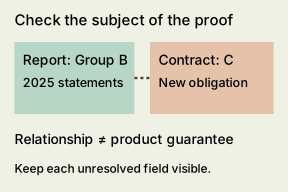
An audit report needs a subject, period and scope. A sales badge saying “audited” leaves all three unresolved. PCAOB AS 1000 describes reasonable assurance concerning material misstatement in financial statements; it does not describe an investment-return guarantee. That US standard is a scoped reference, not evidence that an unnamed provider is subject to it.
- Save the exact claim and identify the legal entity owing the proposed obligation. Record the document URL and date privately.
- Obtain the complete report and associated statements from a source you can check independently. Match entity, reporting period, auditor, report date, framework and opinion. A logo or extracted cover page is insufficient.
- Read the actual opinion and any qualifications or explanatory sections. If the report is unavailable, or the entity differs, record that gap rather than treating the badge as verification.
- Keep separate fields for the offered product, relevant authorisation, custody, withdrawal terms and who owes any purported guarantee. The financial-statement opinion cannot fill these fields merely because it exists.
Completed fictional check
Offer A promises that a new product is safe because Group B has audited 2025 consolidated statements. The supplied report concerns Group B; the proposed contract names Subsidiary C. Record: report subject B; contract counterparty C; relationship and product coverage unresolved. Even a matching entity would not turn a historical statement opinion into guaranteed future repayment. This is a teaching mismatch, not a finding about a real firm.
Record to reuse: claim ___; contract entity ___; report entity/period ___; complete opinion and source ___; mismatch ___; questions the report does not answer ___; next independent check ___. Pause a payment decision while essential evidence remains missing.
A transfer receipt does not establish investment authorisation
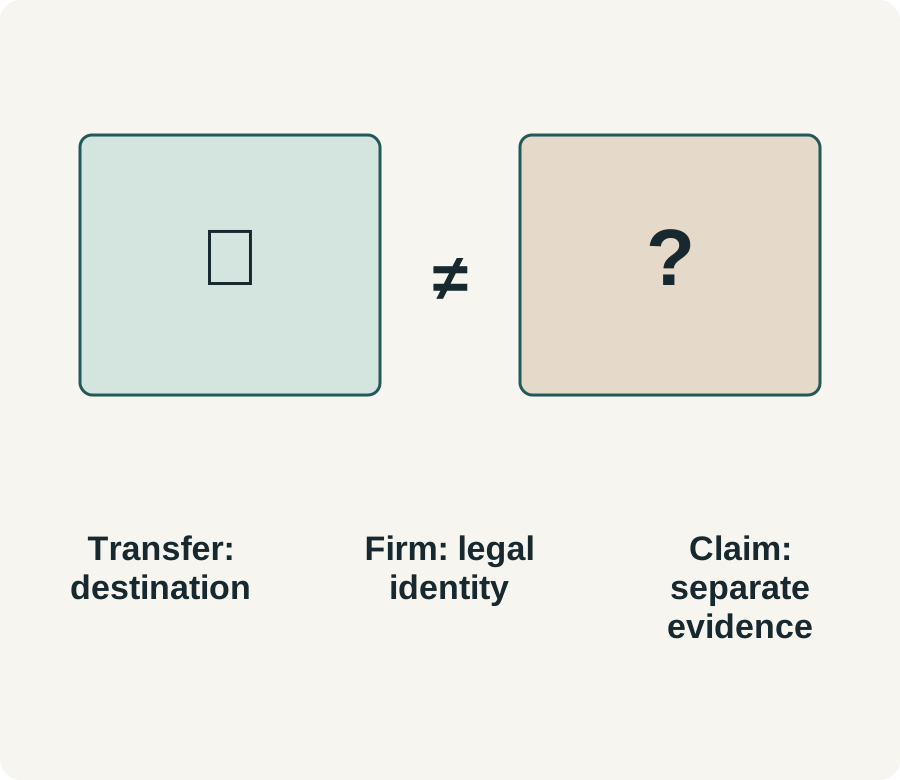
A transaction record answers a narrower question than whether an investment provider is authorised or can repay you. Keep separate evidence fields. This is an invented verification exercise, not an assessment of a named firm and not an instruction to make a transfer.
- Preserve the offer and the exact legal entity claimed by the seller. Record which service and jurisdiction you need to verify.
- If a receipt is offered as proof, identify what it actually shows: network, destination, amount and recorded status. Do not publish identifying wallet details in a public worksheet.
- Check identity and relevant permission independently through the appropriate official source. Keep custody, withdrawal conditions and the underlying return claim as separate unresolved questions.
Filled evidence card: a fictional seller supplies a transfer screenshot and says 'this proves we are approved'. The screenshot may concern a transfer; no independent register entry or matching service permission has been supplied. Outcome: authorisation unverified. A technically successful transfer cannot fill the missing register field.
Record: claimed entity __; service/jurisdiction __; independent source __; exact match or mismatch __; custody/withdrawal questions __; return evidence __. Pause payment while critical questions remain unresolved. Investor.gov's crypto-asset resources explain investor-protection and fraud concerns; a blockchain label or app-store listing is not a substitute for the checks relevant to the actual offer.
Source: www.investor.gov.
A recovery message can be the start of another loss
An unsolicited promise to recover a loss deserves a fresh verification, even when its sender knows details of the earlier incident. Investor.gov describes advance-fee and reload fraud; knowing a transaction amount is not proof of authority.
- Pause the requested payment. Preserve the message and date privately; do not send a seed phrase, password, one-time code or remote-access permission.
- Separate the claimed organization from the contact channel. Find its official contact independently, rather than calling a number or following a login link in the message.
- Ask what service, authority and fee are actually documented. A regulator’s name, logo or purported case number does not verify an offer.
- If money was already sent, contact the payment provider through its established channel and the appropriate reporting authority for your jurisdiction. Recovery is not guaranteed.
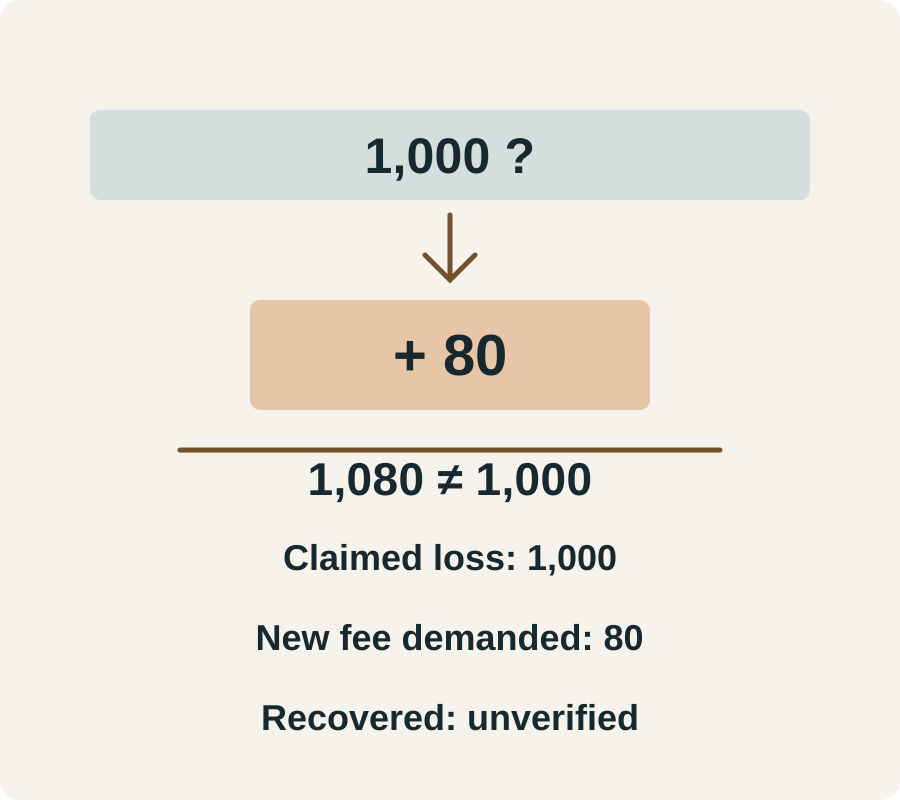
Invented message: “We found your 1,000-unit loss. Pay 80 units today to validate the refund.” The facts available are a claim, an upfront demand and a deadline. There is no independently verified refund. Paying 80 would increase the amount exposed to 1,080 units; it would not prove that 1,000 has been recovered. All amounts are fictional and this is not an allegation against a real business.
Private verification note: received when __; claimed body __; independently found contact __; demanded action __; documents actually verified __; payment-provider reference __; unresolved questions __. Do not publish bank details in that note. A genuine report and an agreement for legal services are distinct matters; confirm the exact scope rather than buying a promised outcome.
Source: www.investor.gov.